
Skip to content
blue and green abstract design

Valeda Light Therapy for Dry AMD

If you have dry age-related macular degeneration (AMD), you may wonder what you can do to care for your sight. Reading, seeing faces, or noticing small details can become harder as AMD affects the center of your vision.

Valeda light therapy offers another option for some people with dry AMD. It uses low-level light and may help improve vision. At Envision Eye Care, we can help you learn what the treatment may offer and whether it could fit your needs.

A smiling elderly man getting an eye exam with an optometrist

What Is Valeda Light Therapy?

Valeda is a treatment given in an eye care office. It uses yellow, red, and near-infrared light to support cells at the back of your eye. These cells help you see.

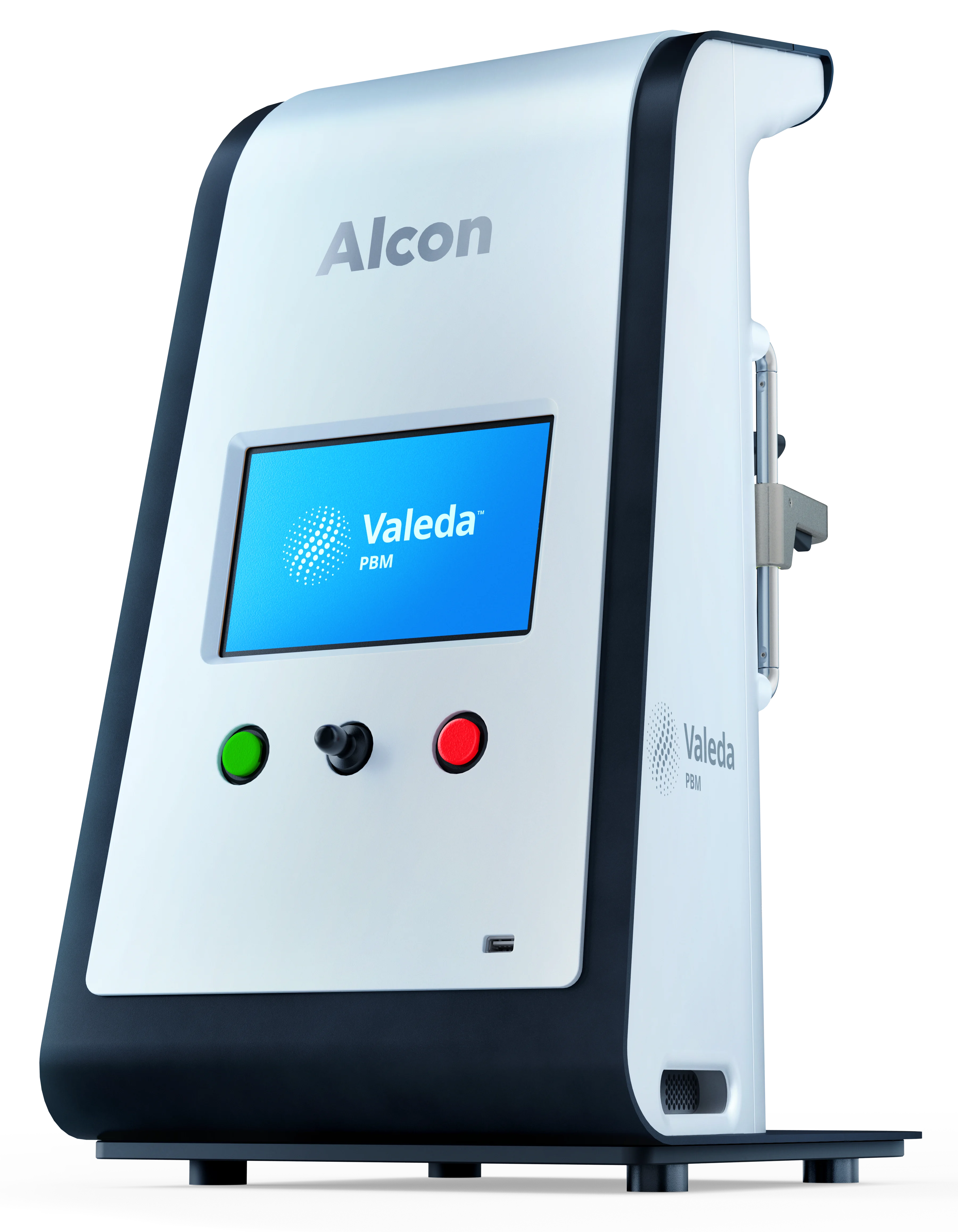
During a visit, you rest your chin on a support and look into a small tabletop device. The treatment takes a few minutes per eye. It uses low-level light rather than a surgical laser, and it does not require needles or numbing drops.

The medical name for this type of light therapy is photobiomodulation, or PBM. You may see that name in information about Valeda.

How May the Light Help?

The cells at the back of your eye need energy to work well. With age and dry AMD, some cells have a harder time doing their job.

Lab research suggests that certain types of light may help these cells use energy more efficiently. Studies in people help doctors learn whether that leads to better sight.

Valeda may improve vision in some eyes. It does not cure AMD, and results vary from person to person.

Close-up of a Valeda PBM eye care device with touchscreen and colored control buttons

Could Valeda Be Right for You?

Valeda is for certain people with dry AMD and mild to moderate vision loss. Your eye doctor checks your sight and takes a close look at the back of your eye before recommending treatment.

The FDA's treatment criteria include:

  • Vision between 20/32 and 20/70 with your best glasses or contact lens correction.
  • Certain small deposits under the retina, called drusen. These include at least three medium-sized deposits or large deposits. Some eyes with areas of cell loss away from the center may also qualify.
  • No wet AMD and no cell loss in the very center of the macula, the part of your eye that gives you sharp central sight.

You don't need to know your eye-chart numbers or scan results before you come in. We'll explain what they mean for you.

What Happens at Your Evaluation?

We start by talking about your vision and what you'd like help with. Your eye doctor checks how well you see and looks for changes caused by AMD.

An OCT scan uses light to take detailed pictures of the layers at the back of your eye. It helps us see where changes have occurred and whether your eye meets the treatment criteria.

Valeda received FDA marketing authorization in November 2024. That means the FDA reviewed the device for use in a specific group of patients. An exam is still needed to find out whether it's right for you.

What Have Studies Found?

A study called LIGHTSITE III followed 100 people with dry AMD for two years. Researchers compared eyes treated with Valeda with eyes given a lower-light comparison treatment.

The Valeda group did better on eye-chart tests on average. The results offer hope, but they don't tell us how much any one person's sight will improve.

What the Results Mean for You

STUDY FINDINGWHAT IT MEANS FOR YOU
About one extra eye-chart line
On average
At two years, the Valeda group could read about 5.6 more letters than the comparison group.
64%
Gained at least five letters
About two in three treated eyes gained one eye-chart line or more.
19%
Gained at least 10 letters
About one in five treated eyes gained two lines or more.
Fewer new areas of cell lossNew geographic atrophy occurred in 6.8% of treated eyes, compared with 24% in the comparison group.

Geographic atrophy means that patches of cells at the back of the eye have been lost. Fewer treated eyes developed new patches during the study. More research will help doctors learn what this means over time.

Eye-related problems occurred at about the same rate in both groups. Researchers found no signs of retinal damage caused by the treatment light. Your doctor can discuss possible risks and review your eye health before care.

What Should You Keep in Mind?

Valeda is a treatment option, not a promise of better sight. A few points can help you set realistic expectations:

Results Vary

Some eyes improved more than others. Your results may be different.

More Research Helps

The main study included 100 people. More studies would help confirm the findings.

A Lower-Light Comparison

The comparison group received a small amount of light, which may also have had an effect.

Only Part of the Picture

Some eye scans and other vision tests showed no clear difference between groups. Better eye-chart results do not mean that every part of AMD improved.

Who Funded the Study?

The device maker helped fund the study. Research by other teams is valuable too.

Long-Term Questions

The study followed people for two years. It did not show how long the benefits last after treatment stops.

Your eye doctor can help you weigh the possible benefits, visit schedule, and cost against your own needs.

How Is Valeda Different From Eye Injections?

Some AMD injections treat geographic atrophy, a later stage of dry AMD where patches of cells at the back of the eye have been lost. These injections serve a different purpose from Valeda. The comparison below refers to injections for dry AMD, rather than injections used for wet AMD.

The choice depends on the changes in your eye, rather than which treatment sounds better.

QUESTIONValedaAMD Injections
HOW IS IT GIVEN?Light delivered from outside the eyeAn injection into the eye
WHO IS IT FOR?Certain eyes with dry AMD that meet the FDA criteriaEyes with geographic atrophy from AMD
WHAT IS THE GOAL?Improve vision in qualifying eyesSlow the growth of areas where cells have been lost
DOES IT BRING BACK LOST SIGHT?Some eyes gain letters on an eye chart; results varyIt does not restore lost vision
WHAT IF CELL LOSS REACHES THE CENTER?Valeda is not indicated for these eyesA retina specialist can review injection options
HOW OFTEN ARE VISITS NEEDED?Nine visits per series, repeated every four monthsOften every one to two months, based on the medicine and care plan

Our team uses eye exams and OCT scans to help you learn which stage of AMD you have. We can talk through your options and discuss specialist care when needed.

How Often Would You Need Treatment?

A Valeda treatment series includes nine short visits over three to five weeks. The series is repeated every four months.

Each light treatment takes a few minutes per eye, though your full office visit may take longer. The schedule adds up to three series, or 27 treatment visits, per year.

That's a real time commitment, especially if you travel to the office. Before you start, we'll review whether you qualify and talk about how the visits could fit into your routine.

Will Insurance Cover Valeda?

Coverage varies by plan, and you may need to pay some or all of the cost yourself. Medicare coverage can also vary.

Before you decide, ask our team and your insurer what your plan may pay and what you may owe.

  • Ask for the cost of a full nine-visit series and an estimate for the year.
  • Check whether your plan covers the treatment. The billing code is 0936T, which helps your insurer identify the service.
  • Ask whether approval is needed before treatment starts.
  • Read any payment notice before signing it. If you have traditional Medicare, you may receive an Advance Beneficiary Notice, or ABN. It explains when you may have to pay if Medicare does not cover the care.

Coverage rules can change. A clear estimate can help you decide whether the treatment fits your budget.

Your Valeda Questions, Answered

Is Valeda Right for You? Let's Talk.

For an evaluation to see if Valeda light therapy is right for you, book an appointment with Envision Eye Care. We'll review your eye health, explain your options in plain language, and make time for your questions.

Use the buttons below to book an appointment or call a location. Our team can help you find the right office for a Valeda evaluation.